
One of the most common questions people ask when they first enroll in Medicare is:
“Does Medicare cover dental?”
And honestly, the confusion makes sense.
Many people assume that once they go onto Medicare, things like:
- cleanings,
- fillings,
- crowns,
- dentures,
- and dental exams
will automatically be included.
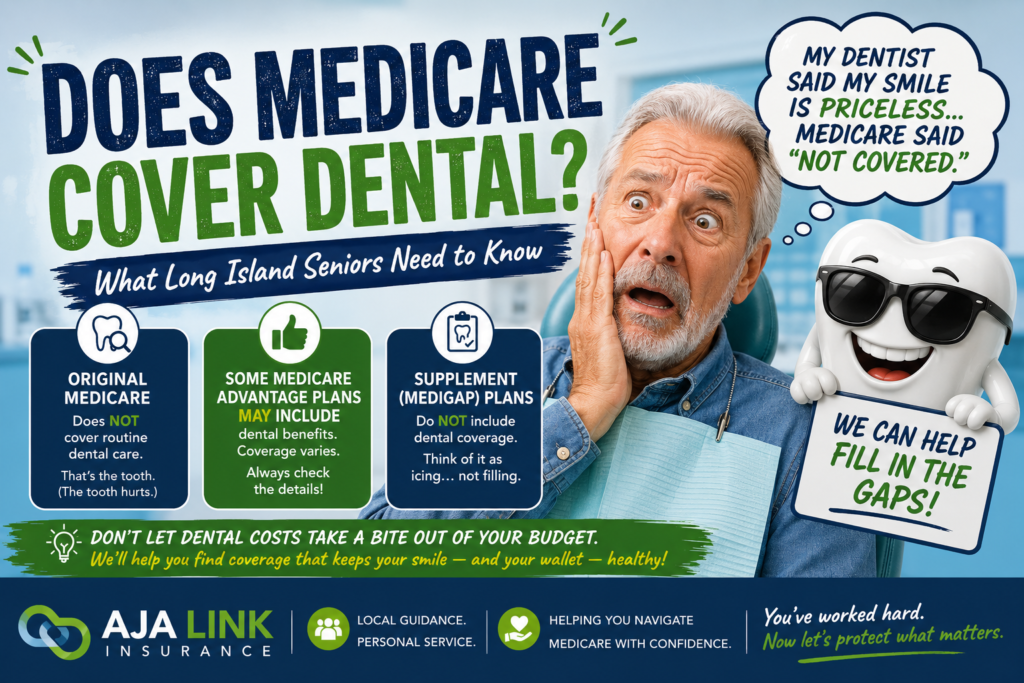
Unfortunately, Original Medicare usually does not cover routine dental care.
But the good news is:
many people ARE able to get dental coverage through certain Medicare plans and supplemental options.
As a Medicare agent here in New York, I speak with many people on Long Island who are surprised to learn how different dental coverage can be depending on the type of Medicare plan they choose.
Let’s break it down in simple terms.
Does Original Medicare Cover Dental?
In most cases:
Original Medicare does NOT cover routine dental care.
That means Medicare Parts A and B generally do not pay for:
- routine cleanings
- dental exams
- fillings
- crowns
- bridges
- dentures
- extractions
- implants
- or routine dental X-rays.
This is one of the biggest gaps in Original Medicare coverage.
For many retirees, dental care can become expensive very quickly without additional coverage.
Do Medicare Advantage Plans Cover Dental?
Often, yes.
This is one reason Medicare Advantage plans have become so popular.
Many Medicare Advantage plans include some level of:
- preventive dental coverage
- comprehensive dental coverage
- or dental allowances.
Depending on the plan, benefits may include:
- cleanings
- exams
- X-rays
- fillings
- crowns
- dentures
- oral surgery
- or allowances toward certain dental services.
For many people on Long Island, having dental coverage included in their Medicare Advantage plan can be a major benefit.
However, coverage varies significantly from one plan to another.
Some plans only cover preventive care.
Others may offer broader dental benefits with higher annual maximums.
That’s why it’s important to look closely at the details before enrolling.
Important Things to Check With Medicare Dental Coverage
Many people focus only on whether a plan says:
“Dental included.”
But the more important question is:
“How good is the dental coverage?”
There can be a huge difference between plans.
Some important things to review include:
- annual dental maximums
- provider networks
- copays
- coverage percentages
- waiting periods
- implant coverage
- denture coverage
- and whether your dentist accepts the plan.
For example:
one Medicare Advantage plan may only include:
- preventive cleanings,
- exams,
- and limited X-rays.
Another may provide several thousand dollars toward more comprehensive dental services.
The details matter.
Dental Networks Matter on Long Island
This is especially important here on Long Island.
Many dental offices may:
- accept certain Medicare Advantage dental networks,
- but not others.
Just because a plan advertises dental benefits does not automatically mean your current dentist participates.
Many people are happy with their dentist and don’t want to switch providers after retirement.
That’s why provider checks are so important before enrolling in a Medicare plan.
Especially on Long Island, where many retirees use the same dentists they’ve seen for years, confirming network participation ahead of time can save a lot of frustration later.
Are There Any Dental Services Original Medicare DOES Cover?
Yes — but only in certain situations.
Original Medicare may cover dental-related services when they are considered medically necessary and connected to a covered medical procedure.
For example:
- jaw surgery after an accident
- oral exams before certain organ transplants
- dental services related to cancer treatment
- certain hospital-based dental procedures
In these situations, Medicare may cover part of the medical portion of the treatment.
But routine dental care is still generally excluded under Original Medicare.
This is important because many people hear:
“Medicare covers dental in some situations”
and assume that means routine cleanings or dentures are included.
Usually, they are not under Original Medicare alone.
Do Medicare Supplement (Medigap) Plans Cover Dental?
Generally:
Medicare Supplement plans do NOT include routine dental coverage.
Medigap plans are designed to help pay medical costs that Original Medicare leaves behind, such as:
- deductibles
- coinsurance
- and skilled nursing facility copays.
Because Original Medicare itself usually doesn’t cover routine dental services, Medicare Supplement plans typically don’t cover them either.
This surprises many people.
They assume:
“If I buy a Supplement plan, dental must be included.”
But most Medigap plans focus mainly on medical coverage rather than dental, vision, or hearing benefits.
Some insurance companies may offer:
- standalone dental plans,
- discount dental programs,
- or optional bundled products,
but those are usually separate from the actual Medigap policy.
What About Standalone Dental Insurance?
Some people choose to purchase separate dental insurance instead of relying only on Medicare Advantage dental benefits.
This may make sense for:
- people keeping Original Medicare + Medigap
- people who want broader dental provider access
- or people expecting major dental work in the future.
Standalone dental plans may help with:
- preventive care
- fillings
- crowns
- dentures
- and other dental services depending on the policy.
However, these plans can also vary significantly.
Some may include:
- waiting periods,
- annual limits,
- or restrictions on major services.
That’s why comparing coverage carefully is important.
Why Dental Coverage Matters More As We Age
Dental health becomes increasingly important as we get older.
Poor dental health can affect:
- nutrition
- heart health
- diabetes management
- speech
- confidence
- and overall quality of life.
Many retirees on Long Island are living active lifestyles well into their 70s and 80s, and maintaining good dental care is a major part of staying healthy.
The challenge is that dental costs can add up quickly.
Even basic procedures like:
- crowns,
- root canals,
- dentures,
- or implants
can become expensive without proper coverage.
That’s why many Medicare beneficiaries look carefully at dental benefits when choosing a Medicare plan.
Is Dental Coverage Worth It?
For many people:
yes.
Even preventive dental care can help avoid larger and more expensive issues later.
And for retirees living on fixed incomes, unexpected dental bills can become stressful very quickly.
The right dental coverage depends on:
- your oral health,
- your budget,
- your dentist,
- and whether you expect major dental work in the future.
Someone who only wants routine cleanings may choose one option.
Someone considering dentures, implants, or extensive dental treatment may choose another.
There’s no one-size-fits-all answer.
Working With a Trusted Medicare Agent Matters
Dental coverage is one of the biggest areas where Medicare can become confusing.
Many people assume:
- “all Medicare Advantage plans cover the same dental”
or - “Supplement plans must include dental.”
That’s usually not true.
Dental benefits can vary dramatically between plans and carriers.
That’s why it’s important to work with a trusted Medicare agent who can help you compare:
- provider networks
- dental coverage details
- copays
- annual maximums
- and overall plan value.
The goal is finding coverage that fits both your healthcare needs and your budget.
Final Thoughts
So, does Medicare cover dental?
Usually not under Original Medicare alone.
But depending on your situation, you may still have options through:
- Medicare Advantage plans
- standalone dental insurance
- or additional supplemental coverage.
The most important thing is understanding what your plan actually covers before you need dental work.
Many people on Long Island are surprised to learn how different dental benefits can be from one Medicare plan to another.
And because dental care can become expensive quickly, reviewing coverage carefully can make a big difference long term.
If you have questions about Medicare dental coverage in New York or on Long Island, it’s always a good idea to speak with a licensed Medicare professional who can help you compare your options and understand what benefits may fit your needs best.